
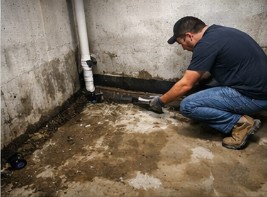
The wooden framing network supporting your residential property relies entirely on a bone-dry foundation environment to maintain its long-term load-bearing capacity. When subterranean water or high humidity levels infiltrate your basement space, this essential wooden skeleton is placed in immediate structural jeopardy.
Unchecked moisture migrates upward from concrete floors and foundation walls, directly attacking sill plates, floor joists, and sub-flooring. Implementing an advanced, professional waterproofing defense system stops this destructive migration path before hidden moisture can compromise your home’s structural stability.
Eliminating Hydrostatic Pressure and Concrete Seepage
Subterranean water accumulation surrounding your foundation walls creates a massive physical force known as hydrostatic pressure. This continuous pressure pushes groundwater through porous concrete block walls and microscopic hairline floor cracks.
- Professional exterior waterproofing membranes create an impermeable seal that stops moisture from ever touching the outer face of your foundation.
- Interior drainage systems collect inevitable concrete wall seepage and channel it away safely before it can pool on the slab.
- Heavy-duty sump pumps remove high water tables from beneath the floor, keeping the overall basement climate dry.
Preventing groundwater from pooling on your basement floor is the first and most critical step in blocking moisture from climbing up to your wooden floor joists.
Defending the Vulnerable Foundation Sill Plate
The sill plate is the horizontal wooden beam that rests directly on top of your concrete foundation wall, acting as the structural anchor for your entire house. Because it makes direct contact with the masonry, it is the very first component to absorb unmanaged basement dampness.
- Installing a professional vapor barrier cuts off capillary action, which is the process by which dry wood sucks moisture right out of damp concrete.
- Advanced drainage tracking systems keep water levels well below the top of the foundation wall line during heavy storms.
- Specialized anti-microbial wood treatments applied during waterproofing provide a secondary layer of resistance against fungal growth.
Safeguarding the foundational sill plate ensures that the structural connection between your concrete foundation and your wooden walls remains rock solid.
Controlling Ambient Humidity and Preventing Condensation
High humidity levels inside an unvented or unprotected basement create a continuous cycle of condensation on cold wooden overhead surfaces. This invisible, airborne moisture is just as destructive to structural framing as an active plumbing leak or direct groundwater flooding.
- Commercial-grade dehumidifiers installed by professionals keep your basement’s relative humidity consistently below fifty percent.
- Sealing off open basement crawlspaces with heavy-duty encapsulation plastic stops outdoor humidity from feeding structural rot.
- Proper mechanical ventilation systems exchange damp, stagnant air for clean, dry air to maintain an optimal indoor climate.
Eliminating high ambient humidity deprives wood-destroying fungi of the moisture they require to sprout, multiply, and feed on your sub-floor.
Preventing Costly Floor Joist Spalling and Sagging
When floor joists absorb excessive moisture over multiple seasons, the wood fibers soften, expand, and lose their natural load-bearing stiffness. This internal structural degradation leads to sagging floors, jammed doors, and warped drywall upstairs in your main living spaces.
- Structural joist wrapping and sistering techniques are performed alongside waterproofing to reinforce slightly weakened framing members.
- Advanced floor drainage mats keep rising floor moisture from evaporating directly into the exposed overhead ceiling joists.
- Regular professional moisture tracking logs ensure your floor joists return to a safe, dry equilibrium after the waterproofing is complete.
Restoring your floor joists to a permanently dry state stops wood rot from spreading across your entire first-floor support system.
Halting Toxic Mold and Wood-Rotting Fungi
Wood-rotting fungi require only oxygen, a wood food source, and a consistent moisture level above twenty percent to destroy a timber framing network. Once these fungal colonies establish themselves behind finished basement drywall, they quietly eat away at the core strength of your home.
- Applying specialized biological sanitizers during the waterproofing process eradicates existing fungal colonies and invisible mold spores.
- Continuous active airflow management prevents pockets of stagnant, damp air from feeding hidden mold growth behind wall insulation.
- Eliminating organic basement moisture ensures that your home’s wooden skeleton remains a completely unhospitable environment for fungi.
Eradicating the environmental conditions needed for mold growth protects both the structural timber of your house and the respiratory health of your family.
Secure Your Foundational Investment for Decades
Investing in a professional, comprehensive basement waterproofing system is the ultimate proactive strategy for eliminating catastrophic framing rot. Taking a decisive step today seals your property against relentless subterranean water, rising moisture vapor, and destructive humidity cycles.
Ensuring the total dryness of your sub-floor framework preserves your property’s market equity and prevents incredibly invasive structural replacement bills down the road. Prioritizing this essential exterior and interior preservation service delivers absolute structural stability and true peace of mind for the long haul.