
Foundations are the unsung heroes of any building, but the demands placed on a commercial substructure are vastly different from those of a standard family home. When structural shifting occurs, the methods used to stabilize a business property require an entirely different level of scale, planning, and engineering precision.
Understanding these key differences is essential for property managers, investors, and business owners who need to protect their commercial real estate investments. Miscalculating the unique requirements of a large-scale structural fix can lead to severe financial liabilities and compromised building safety.
Massively Increased Weight Loads and Deep Piering Systems
Commercial structures present immense dead weight and live weight loads that residential concrete pads never have to endure. Because warehouses, retail centers, and multi-story office buildings exert incredible downward force, standard repair methods simply will not suffice.
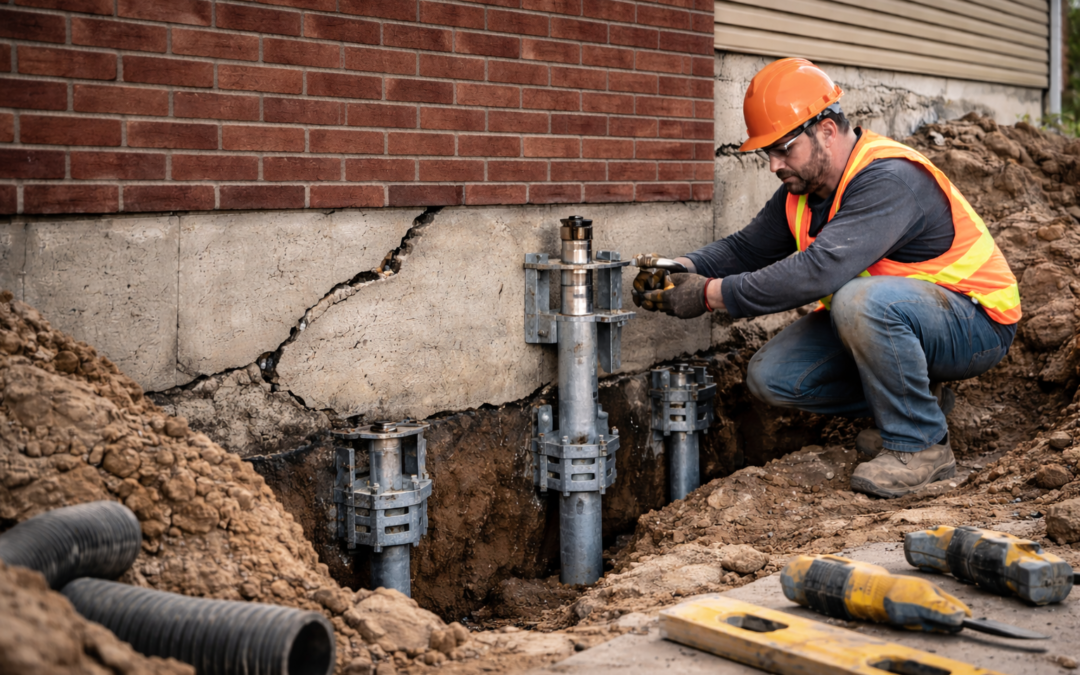
- Engineers must utilize heavy-duty steel helical piers or micro-piles that bypass shallow, weak topsoil.
- Support systems are driven much deeper into the earth, often reaching solid bedrock or highly compacted load-bearing strata.
- The equipment required to install these massive stabilizers includes large hydraulic rigs that are rarely seen on residential lawns.
By anchoring deep into the earth’s stable layers, these specialized systems ensure that massive commercial framing remains perfectly immovable over time.
Navigating Complex Regulatory Compliance and Strict Building Codes
While residential fixes typically fall under straightforward local building codes, commercial structural work triggers an intricate web of strict regulations. Every phase of a commercial restoration project must be meticulously documented and approved by certified structural and geotechnical engineers.
- Contractors must strictly adhere to OSHA workplace safety guidelines to protect both the repair crew and the public.
- Projects frequently require detailed zoning permits, environmental impact reviews, and formal civil engineering sign-offs.
- All materials used, from commercial-grade polyurethane foam to high-tensile steel, must meet precise load-bearing certifications.
Navigating this regulatory landscape ensures the property remains fully compliant with commercial insurance policies and local municipal laws.
Minimizing Costly Business Downtime and Operational Disruptions
When a home’s foundation is repaired, the family can usually live around the construction, but a business closure means immediate, severe financial loss. Commercial foundation specialists must structure their work schedules to keep businesses open and running smoothly.
- Crews often work overnight, during holidays, or in off-peak shifts to avoid disrupting daily tenant operations.
- Underpinning and slab leveling are executed in precise, sectioned phases to keep parking lots and loading docks accessible.
- Low-profile equipment and clean injection techniques are favored to prevent dust, heavy fumes, or extreme noise during business hours.
Prioritizing operational continuity allows companies to maintain their revenue streams even while major structural restoration is underway right beneath their feet.
Addressing Advanced Utility Infrastructure and Subsurface Networks
Beneath a residential slab, you will find basic plumbing and electrical lines, but commercial properties house massive, complex utility networks. High-voltage electrical conduits, commercial sewer mains, and intricate fiber-optic communication lines are frequently embedded directly within or beneath the concrete.
- Ground Penetrating Radar is widely deployed to map out subterranean utilities before any excavation or drilling begins.
- Specialized lifting techniques, such as targeted polyjacking, are monitored carefully to prevent snapping high-pressure water mains.
- Repair strategies must account for heavy machinery vibrations that could potentially rattle sensitive industrial equipment inside the facility.
Safeguarding these vital utility networks prevents catastrophic building blackouts and expensive emergency infrastructure repairs.
The Role of Comprehensive Geotechnical Soil Testing
Residential foundation issues are often solved by looking at surface drainage, but commercial fixes demand an exhaustive analysis of the deep subsurface environment. Large corporate plots cover expansive acreage, meaning the soil composition can vary drastically from one corner of a warehouse to the other.
- Core soil samples are extracted from multiple deep boring locations across the commercial lot.
- Laboratorial testing determines the exact moisture expansion coefficients and load capacities of the underlying clay or silt.
- Repair blueprints are customized mathematically to counteract localized soil liquefaction or shifting water tables.
Relying on hard data rather than generic assumptions allows engineers to design a flawless stabilization plan tailored perfectly to the specific terrain.
Protecting Your Commercial Real Estate Portfolio
Investing in professional commercial foundation restoration is the ultimate way to secure the structural safety and financial value of your business property. Proactively resolving these complex substructure issues shields your enterprise from catastrophic structural failures, tenant lawsuits, and massive asset devaluation.
Partnering with a dedicated commercial structural team ensures that your building rests on a solid, legally compliant foundation designed for heavy-duty longevity. Take the necessary steps today to fortify your facility, protect your tenants, and ensure your business operations stand strong on stable ground.