
A saturated, squishy lawn is more than just a nuisance that ruins your weekend landscaping plans. Chronic standing water drowns out healthy turf grass, breeds swarms of mosquitoes, and eventually seeps into your home’s foundation or crawl space.
When standard soil absorption fails, local yard drainage contractors use specialized engineering methods to permanently redirect stormwater runoff. Investing in professional exterior drainage alterations converts a swampy backyard back into a usable, dry oasis while shielding your home from expensive structural rot.
Conducting a Topographical and Soil Permeability Assessment
Before digging any trenches or laying pipe, a drainage specialist must analyze why water accumulates on your specific lot. Contractors study your property’s natural slope, look for pooling patterns, and test the composition of your yard’s soil.
- Laser transit levels map the exact high and low points across your property line.
- Percolation tests determine if tight clay layers are blocking natural subsurface absorption.
- Specialists locate municipal storm sewers or safe downhill outlets to receive redirected runoff.
Diagnosing the exact root cause prevents wasteful digging and ensures your custom drainage blueprint functions flawlessly during severe downpours.
Installing Subsurface French Drains for High Water Tables
If your turf feels like a soaked sponge days after a heavy rainstorm, subsurface water accumulation is likely the culprit. Contractors solve this by installing a French drain, which acts as a hidden, subterranean highway to collect and carry away underground moisture.
- Workers excavate a sloped trench along the wettest zones of your property.
- The trench is lined with permeable filter fabric and filled with clean drainage gravel.
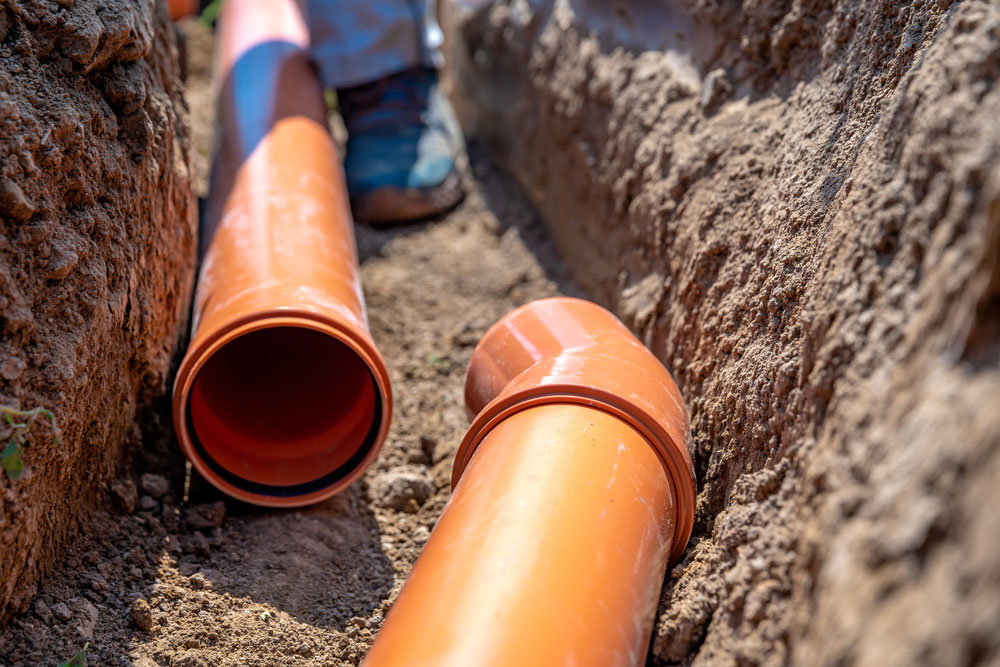
- A perforated PVC pipe is nestled inside the gravel to channel sub-surface water away.
By creating an easy path of least resistance, a French drain effectively lowers the water table beneath your grass line to keep the topsoil consistently firm.
Capturing Heavy Surface Runoff with Strategic Catch Basins
Massive torrential downpours often overwhelm the ground instantly, causing sheet water to rush across patios, driveways, and low-lying garden beds. For fast-moving surface water, drainage contractors install heavy-duty catch basins directly in the path of the flood.
- In-ground grates trap rushing surface water before it can pool around your home’s foundation walls.
- Built-in sediment traps collect leaves, mud, and yard debris to keep downstream pipes from clogging.
- Subterranean smooth-wall pipes connect the basins, rapidly flushing stormwater out to the street or a dry well.
Installing these collection points ensures that large volumes of storm runoff vanish down the drain instead of creating a muddy lake on your lawn.
Regrading the Land to Correct Improper Slopes
Sometimes the simplest reason for a soggy lawn is poor yard grading that slopes directly toward your home rather than away from it. Contractors deploy heavy earth-moving equipment to reshape the contours of your yard, utilizing natural gravity to solve your problems.
- Skid steers and mini-excavators carefully shave down high spots that trap pooling water.
- Crews build up low depressions with compactable topsoil to establish a positive slope away from structures.
- Open, grassy swales are carved into the landscape to naturally guide water safely around your property lines.
Correcting your property’s physical grade permanently fixes pooling issues without relying entirely on mechanical pipe systems.
Extending Downspouts and Integrating Discharge Outlets
Gutter downspouts that dump water right next to your home’s foundation are a primary cause of basement flooding and localized yard saturation. Drainage professionals resolve this by tying your home’s roof gutter system directly into an underground discharge network.
- Downspouts are connected to solid, underground PVC pipes that travel far away from the house.
- Pop-up emitters are installed at the terminal end, opening automatically to release water when it rains and closing to keep out pests.
- High-volume discharge lines are routed to code-compliant municipal drainage zones.
Safely directing roof runoff away from your immediate yard prevents thousands of gallons of water from oversaturating your lawn in the first place.
Securing a Dry, Beautiful Landscape
Partnering with a professional yard drainage contractor is the single most effective way to eliminate waterlogged grass and protect your property value. Implementing targeted drainage infrastructure shields your home from foundation cracks, mold, and costly structural deterioration.
By taking a proactive, engineered approach to stormwater management, you secure a stable, functional yard that your family can enjoy year-round. Reach out to an expert drainage specialist today to inspect your property and secure your peace of mind before the next big storm hits.