
Pier and beam foundations offer excellent accessibility, but they are uniquely susceptible to shifting soil, wood rot, and moisture damage over time. When these underlying structures begin to fail, ignoring the warning signs can lead to severe structural issues throughout your entire home.
Understanding the step-by-step restoration process empowers you to protect your investment and make informed decisions regarding your property. Investing in timely repairs ensures that your home remains safe, level, and structurally sound for decades to come.
The Vital Initial Structural Assessment
Before any heavy machinery arrives or support structures are adjusted, a comprehensive evaluation must take place to map out the damage. A structural specialist will map the elevations of your floorboards and crawl underneath the house to inspect the status of every support post.
- Technicians look for cracked concrete pads, leaning piers, and sagging wooden beams.
- Soil moisture levels are analyzed to determine if shifting earth is the primary culprit.
- Laser leveling equipment identifies the exact zones that require lifting.
This crucial baseline prevents guesswork and ensures that the remedy targets the root cause rather than just masking the symptoms.
Clearing Obstacles and Ensuring Under-Home Access
A successful repair project requires adequate room for the crew to work safely and efficiently within the confined crawl space environment. Technicians must secure clear access points and ensure the work zone is free from hazardous disruptions.
- Workers clear out debris, old insulation, and any wildlife blockages from the crawl space.
- Temporary lighting and ventilation systems are routed beneath the floorboards.
- Mud or standing water is pumped out to create a workable, safe environment.
Taking the time to prep the site properly guarantees that the actual leveling process can proceed without unexpected delays.
Shoring Up and Rebuilding the Wooden Framework
Often, the concrete piers themselves are fine, but the wooden components resting directly on top of them have degraded due to moisture or pest damage. This phase focuses entirely on replacing or reinforcing the heavy timber bones of the foundation.
- Rotted sill plates are carefully removed and replaced with pressure-treated lumber.
- Damaged joists are reinforced by “sistering” new beams directly alongside the weakened ones.
- Heavy-duty temporary jacks hold the weight of the house while these core wood swaps occur.
By restoring the integrity of the wood framing, the home gains a stable platform that can uniformly distribute its weight.
Re-leveling the Home with Precision Hydraulic Jacks
This is the most critical stage of the entire procedure, requiring patience, experience, and a gentle touch to avoid cracking the interior drywall. Unified hydraulic jack systems are placed strategically beneath the main girders to lift the structure back to its original position.
- Jacks are raised a fraction of an inch at a time across multiple points to prevent structural shock.
- Crew members keep a constant watch on interior walls and door frames during the lift.
- Technicians verify that the home has achieved optimal level status before securing the lift permanently.
Watching a home slowly return to its true level alignment highlights the impressive power of modern engineering.
Installing Permanent Piers and Securing the Foundation
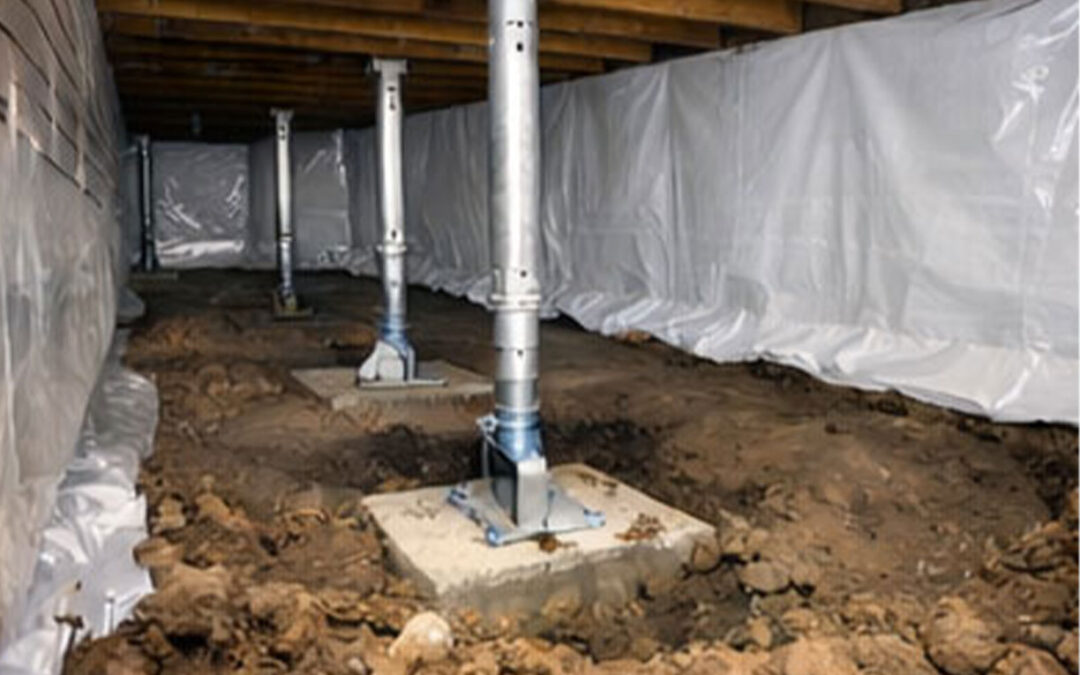
Once the house is back in its proper alignment, the temporary jacks must be replaced with permanent, heavy-duty support systems. This ensures that the newly leveled home stays put regardless of future soil movement.
- Cracked or shifting concrete blocks are replaced with poured-in-place concrete or steel piers.
- Shims made of cured hardwood or steel are driven between the new piers and wooden beams for a tight fit.
- The crew secures all connection points to prevent future shifting or slippage.
With the permanent supports locked down, the structural integrity of your crawl space is fully restored.
Securing Peace of Mind for Your Property
Choosing to repair your pier and beam foundation is the ultimate way to safeguard the structural health of your entire property. Addressing these below-ground structural issues stops cascading problems like cracked drywall, sloping floors, and sticking doors right in their tracks.
By partnering with a team of qualified structural professionals, you ensure that the heart of your home rests on a rock-solid base. Take action today to protect your family and your financial investment by locking down a stable tomorrow.