
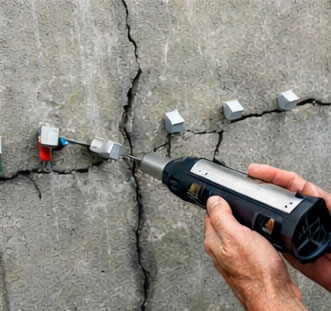
Basement walls endure tremendous stress from the weight of your home and the shifting soils pressing against them from the outside. While minor hairline blemishes are common as concrete cures and settles, certain structural fractures signal severe structural instability.
Ignoring a critical compromise in your foundation can quickly lead to bowing walls, water intrusion, or even a catastrophic partial collapse. Learning to differentiate between superficial cosmetic flaws and high-stakes structural threats is the first step in protecting your property.
The High Risk Threat of Horizontal Wall Fractures
Horizontal cracks are widely considered the single most dangerous type of fissure you can find in a concrete block or poured basement wall. These lines run parallel to the floor and are a direct indication that the outer soil is overpowering the structural strength of the wall.
- Heavy clay soils expand when wet, exerting immense inward hydrostatic pressure against the buried masonry.
- Frost heaving during brutal winter freeze-and-thaw cycles can also push subterranean walls inward.
- Over time, an unaddressed horizontal split will cause the center of the wall to bow and buckle under the weight.
When a wall loses its vertical alignment due to lateral pressure, the structural load of the entire house above is severely compromised.
The Telling Pattern of Stair-Step Masonry Cracks
If your basement is constructed from cinder blocks or brick, stair-step cracks that snake along the mortar joints require immediate attention. This distinctive pattern indicates that a specific section of your foundation is sinking faster than the surrounding earth.
- Differential settlement occurs when poor soil compaction or broken underground pipes wash away the dirt beneath your footing.
- The crack will usually climb up and across the block joints, widening at the top as the structure pulls apart.
- Gaps in the mortar provide an easy pathway for destructive groundwater to flood your basement space.
Addressing a stair-step pattern early prevents the footing from shifting so far out of alignment that the masonry becomes unsalvageable.
Severe Vertical Cracks Accompanied by Leaning and Shearing
While a single vertical hairline line is often just a harmless shrinkage blemish from the concrete’s original drying phase, multiple wide vertical fractures are a completely different story. If the cracked concrete sections are no longer flush with one another, your home is experiencing a severe structural shift.
- Vertical gaps that are wider at the top than the bottom indicate that the foundation is heaving or dropping on one end.
- If you can stick a coin or a finger inside the opening, the gap is actively moving and structurally unstable.
- Shearing occurs when the wall starts to separate entirely from the adjoining corners of the foundation.
Any vertical separation that lets you feel a physical ledge between the two sides of the concrete demands urgent structural intervention.
Compound Structural Failures Involving Bowing and Bulging
Sometimes a crack itself is just a symptom of a much larger physical deformity occurring across the expanse of the wall. When a basement wall begins to bow inward or bulge at the center, the structural integrity of the home has dropped past a critical tipping point.
- The structural concrete or cinder blocks fracture internally, creating a spiderweb network of distress fissures.
- Doors on the upper floors will often fail to latch, and drywall upstairs will crack as the framing shifts.
- The top of the wall can actually slide off the sill plate, breaking the connection between the foundation and the roof.
A bulging wall is actively failing, meaning it requires immediate structural reinforcement to prevent a total localized collapse.
Hairline Fractures That Leak Active Mud and Groundwater
Even if a crack appears small and vertical, it immediately moves into the dangerous category if it continuously leaks water or mud during storms. Active water intrusion means the structural damage is being accelerated by constant erosion right beneath your feet.
- Flowing water continuously washes away the crucial support soils located directly outside your foundation walls.
- Persistent moisture inside the gap causes internal steel rebar to rust, expand, and shatter the concrete from within.
- Chronic dampness breeds toxic black mold behind finished basement walls, ruining interior air quality.
A weeping crack must be professionally sealed and reinforced from the root cause before the constant moisture destroys the wall’s internal steel spine.
Securing the Structural Backbone of Your Home
Taking immediate action to repair severe basement wall fractures is the ultimate way to preserve your home’s safety and market value. Leaving these critical structural warnings to worsen only guarantees more expensive repairs, ruined basements, and compromised living areas down the line.
Partnering with a skilled structural team allows you to apply heavy-duty solutions like carbon fiber straps or steel piers to stabilize the home permanently. Do not leave the safety of your family to chance; schedule a professional foundation evaluation today to keep your home standing on rock-solid ground.